Basic icons

Today, I would like to explain some of the more common icons or symbols that you might
find in many apps and websites.

The ‘Hamburger’ icon can have various different looks, but it is always a group of three


In most apps and on some websites, you will find 3 dots or 3 lines somewhere, usually in a
top corner. They stand for MENU, in other words, a place where you can select things. If you
click on it, a list will be displayed with more things to do, like Print, Share, Save and more,
depending on the app. So if you are looking for an option in an app, and you can’t find it on
the main screen, look for the 3 dots/lines.


The Share icon

or on an Apple device


A second very common icon is the share icon, this means you can share, or send the current
page or picture to someone else via email or messaging. Again the way it works depends on
the app or device, but it will generally give you options to email or message using Facebook
Messenger, WhatsApp, SMS or more. Once you choose the service, it allows you to enter the
name or number of the person you want to send it to.


Don’t confuse the share icon with the Back icon, which can be an arrow or triangle
pointing to the left and will always take you back one screen or step.


I hope this will help you a bit, and don’t be afraid to experiment with these.

A phone for ‘not so young’ eyes

Mobile phones are very handy devices, but sometimes the small size has its drawbacks, especially
if your eye sight is no longer what it used to be. But there are ways to make life easier and most of
them are built right into the phone.

On an Android phone, go into Settings (usually a gear icon), type Magnification into the search bar
on top. Click on the entry and under options you will find three ways of turning on a shortcut:
Accessibility button, Hold Volume keys and Triple tap screen. Choose one of these, there is an
explanation how to use it. For example if you choose triple tap, you can triple tap your screen in
any app and it will magnify what is on the screen, use 2 fingers to drag what is displayed to see all.
Another triple tap sets the display back to normal.

On an iPhone it is even simpler: just triple click the side button on your phone to open the
magnifier and swipe from the bottom of your screen to close it.
Another way, that works on both types of phones is the 2 finger zoom: put two fingers together on
your screen and then move your fingers apart – the screen will be magnified; or put two fingers
apart on the screen and move them together – things will go back to normal.

If you would like to know more about options to make phone use easier, have a look around the
Accessibility options in Settings on Android or iPhone, there are many ways to help you with vision,
hearing and even motor skills; have a look around.
Next time we will have a look at how to use the ‘talk to’ features to avoid typing on the rather small
keyboard.

Talking to your phone

Last time we looked at various ways to increase the size of the text or pictures on your phone,
today I want you to meet your very own secretary.
I’m sure you have heard of Siri or Alexa or the Assistant – they are clever programs that use
artificial intelligence to allow you to ask questions or command your device to do something, like
turn on the light, make a call and more.
If this sound a bit too science-fiction to you, there is an easy and useful way to ease yourself into
this new age.

Whenever you want to type text on your phone, a little keyboard pops up; have you ever looked at
the various keys and icons apart from the letters and numbers? There should be a microphone
icon


If you click this you can dictate to your device instead of typing; as you speak your words will
appear on the screen. A little word of warning, though: make sure you proof-read the text before
hitting ‘send’, sometimes your assistant has her own ideas of what you might have said. If that
happens, you can just tap the error and correct it manually.


This should be available on any phone, whether Android (Google) or iPhone (Apple), if the icon
does not appear, you might have to activate it in your phone settings.
A similar option is also available on your Windows or Apple computer, but it requires the
appropriate setting to be activated.

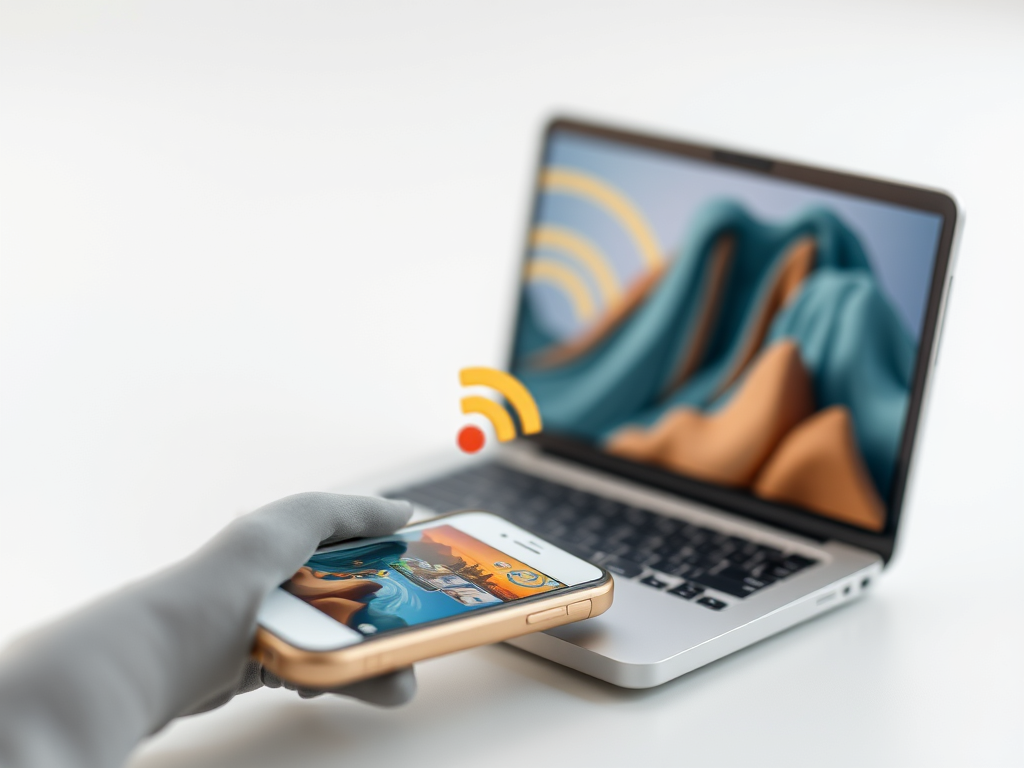
Moving your photos around

Photos – we seem to have more now than ever with every phone also being a camera and we are
happily photographing all and sundry, but how do we get them onto our computer?


As always there are many ways to accomplish this, but here is one way to get your photos from
your phone to your windows computer (on Apple devices, iPhone and Mac computers it happens
automatically over iCloud) :

Use your charge cable for the phone and plug it into your phone and into your Windows computer
and make sure your phone is unlocked. If your Photo app has been set up to import from the
phone, it will open automatically once connected. If nothing happens, go into your Photos app,
and find the Import tab on the top right of the app, then click import from a connected device. It
should now find your phone and will scan it for photos.

At this stage they have NOT been copied to your computer, you can now select ALL, NEW ONLY or
NONE to choose which photos to copy. Make sure you click ‘Import’ at the bottom to get things
going.

If you have an iPhone, the procedure is the same, but the Computer might identify your phone as
a USB Device, that’s OK.

If Windows cannot find your phone, your cable might only be a charge cable not a file transfer
cable, try another cable if you have one. Or, the USB settings on your phone are not set up for file
transfer. In either case you might need some more help.

Other ways to copy your photos could be using Google Photos, which will upload your photos to
the cloud, similar to the iPhone and you can then access and download them again on your
computer from your Google account. Or you could get real fancy and use Bluetooth or Nearby
Sharing, but that is easier explained in person.

Scams are everywhere

With so many messages, emails and other pop-us on our phones and computers it is sometimes
hard to work out what is ‘real’ and what is a scam (something that might cost you money or other
hardship) or just simply spam (just another word for advertising).
You can teach your email system and your messages (SMS) to recognise some unwanted items
and move them immediately into your junk folder, but there will always be others that slip through
the net. Also, it is getting harder and harder to recognise false messages, and there is only one
general rule of thumb: do not click on any links in emails/messages and other communications.
Instead go to the site directly by asking Google and work from there. Links are usually shown in
blue and/or underlined and when you hover your cursor (arrow) over it it might change into a
hand.
There are other ways that can give you a clue that the message is not genuine, like spelling
mistakes, spaces within words and more, but some scammers are getting very good and make
fewer mistakes.
There is a good podcast (which is a bit like a radio program) on this website about this subject
https://beconnected.esafety.gov.au/podcast/what-online-scammers-dont-want-you-to-know
and also some tutorials here:
https://beconnected.esafety.gov.au/topic-library/articles-and-tips/8-ways-to-protect-your-privacy-online
The Beconnected website can help you with a lot of other questions, too and is well worth
exploring.
Not directly linked to this, but just as important in keeping you safe online: always keep your
devices and apps updated. These updates (at least once a month sometimes more frequently) plug
little security holes that have been discovered, sometimes before bad actors can exploit them. But
again, go into your settings to do this if you are at all unsure whether the link or message you are
supposed to click is genuine.

Help your phone to ‘call home’

“I’ve lost my phone!”
It seems to happen so often that someone has lost their phone and asks for help – but with a bit of forethought it is quite easy to find your phone again, and this works for both Android (Samsung, Nokia etc) and iPhone.

In your phone, go to settings and search for ‘find my’ – there will be instructions how to turn this function on for the phone; just follow these instructions and make sure you press ‘save’ at the end. Done!


Now when you lose your phone, just go to the nearest computer, tablet or another phone and go to a web browser (Chrome, Firefox, Edge, Safari, etc), search for “find my phone”, select Google or Apple(iCloud) from the results, sign in with your Google or Apple ID, and you will see a map with the location of the phone. It usually only gives you a general area of a few square metres, but at least you know where to look 🙂.

Depending on the device, you can even get the phone to make (a very loud) sound from the website or wipe the content of the phone (if it has been irretrievably lost) or other actions.


All this comes with a caveat: your phone must be online (if you dropped it in an area of little or no reception this might not work) and location services should be on. Apple devices (iPhones) are a bit more forgiving, but still have to be turned on to be found.


Your best chance is to check your phone right now and turn on ‘find my device’ – you never know when you will need it.

How to find your stuff


Have you ever tried to find a particular photo or document on your computer and it just wasn’t there? It is all about organisation and you have to become your own private librarian. Even if you only have a dozen books, if they were all in loose pages instead of bound, you would have difficulties finding what you are looking for.

The same thing applies to your computer: instead of books you have folders, and every folder has a number of documents or files in it. You generally have predefined folders like Documents, Photos, Downloads etc, but you can expand that by creating sub-folders, e.g. within Documents you could have Letters, Recipes, Newsletters,…. You can then narrow down the area where to look for a particular file.

The more files you have, the more important is organisation. How many photos have you stored on your computer? If they are all in one folder (Photos) and are just named by the generated number or date, it will be very difficult to find a particular shot of Uncle Fred. But if you created folders (e.g. Tina’s Wedding, Holiday in Bali…) then it will be much easier; and if you then renamed the photos as you store them to something that makes sense, like Uncle Fred, Cucumbers,…. It is really easy to find what you are looking for.

Doing this as you store new photos is not that hard, but if you already have a collection of 1000s, you
might have to spend a few winter evenings going through it all – it might be worth it.

As long as you have file names that mean something, you can then use the Search function to look for items, and at least narrow down the number of files you will have to check.

To some extend the photos app on your device might be able to help you by automatically sorting photos by certain criteria – but it can be a bit hit and miss.

Passwords!

Passwords! Can’t live with them and can’t live without them 😉
They can be the bane of our online lives, but there are some tricks to make things a bit easier.


I hope you all know to use different passwords for different sites, and not to make them too obvious (‘1234’ comes to mind). But remembering all these passwords is a challenge even for the most organised person; the best way is a password manager, which is a program that collects all your passwords and presents them to you when needed, all you need to remember is ONE master password.

Some browsers (Chrome, Edge…) have this built in (when it asks you to remember the password), but you can also get free programs that work across any browser and device and that automatically create safe passwords for you.

Second best option would be a ‘little black book’ of any colour, where you note all your passwords, make sure to add the user id and the website. Needless to say, guard this book with your life and don’t leave it lying around.

Ideas for safe passwords include using the starting letters of a song or poem, e.g. ‘Hdsoaw’ – Humpty Dumpty Sat On A Wall, easy to remember but hard to guess.
Or use 3,4 or 5 unrelated words, like leftelephantrugbyhouse – who would guess that or find it in a dictionary?

There are other ways to identify yourself, for example your fingerprint reader on your phone or tablet, or your face or a special dongle you have to plug into your computer, but these are only available on a limited number of devices and sites.
Industry is working on making things easier for us, but until then we just have to learn to
work with what they give us.

How to go where you want to go

Remember the stand-alone navigation units we used to have in our cars? Now it’s all in
your phone, and it doesn’t matter if you’ve got a $1500 top of the range phone or the $50
special: they all have navigation built in.

And there is no need to laboriously type in the town, the street name and the number: you can just say the address and not only will it show you where the address is and how to get there, it can also tell you of any traffic jams, how long it should take you taking those into account and with street-view you can even see what your destination looks like!


Look for an app called ‘Maps’ both on Android and iPhone, and make sure you have your
location services turned ON.
You might have to give the app some permissions, the first time you use it. A symbol should
show you where you are on the map.


There are some settings to specify if you are driving, walking or using public transport; if
you are driving you can set it to avoid toll roads, or ferries. You can get spoken directions or
just the movement on the map, you can ask for the nearest service station, cafe, ATM and
more. It is really like having your own local guide with you. And when you leave you car,
you can mark the spot where you parked so you find your car again.


There is almost no way of ever getting lost. Go try it out and play with it!

Keeping your device up-to-date

Updates – sometimes it seems as if your devices want to update all the time. What are
these updates and should you update?


The simple answer is: yes you should update as soon as practicable. There are essentially
two types of updates (both on phones and on computers): system updates and software
updates. Both fix security and other problems, and also sometimes add extra functionality.

System updates update your operating system (Windows, Android) which is what makes
your device work, software updates update your apps (like Facebook, Chrome etc). In the
case of Apple devices (Mac, iPhone) both these types are generally combined in one
package.

An operating system and apps are always a work-in-progress; although they are tested
before they are released, there are so many variables in devices and use that some glitches
only appear once lots of people use them, so there will be ‘fixes’ for that. Also there are
those generally called ‘hackers’ that try their best to find ways into the app or system,
sometimes just to make sure they are ‘unhackable’ but of course also for nefarious
purposes. Whenever a security hole is discovered, an update is sent out to plug it.


So even if you are happy with the way your device and your apps work, because of these
security fixes it is important that you do install these updates whenever they are offered.
Usually you can use your device while they are downloaded (in case of phones make sure
you have enough data or link to WiFi), but the device will need to restart after or during the
install.